Introduction to Wood Finishing
Wood finishing is an essential part of woodworking that enhances the appearance and durability of your projects. Whether you are a beginner or an experienced woodworker, knowing which tools to use can significantly impact the quality of your finishes. In this comprehensive review, we will explore the best hand tools for wood finishing, focusing on simplicity and effectiveness.
Understanding the Basics of Wood Finishing
Before diving into the specific tools, it’s important to understand the stages of wood finishing. Generally, the finishing process includes:
- Preparation
- Application of stains or finishes
- Buffing and polishing
Each stage requires different tools, and we will cover the best hand tools suited for each task.
Essential Hand Tools for Wood Finishing
Here are some essential hand tools that every beginner should consider having in their toolkit for wood finishing:
1. Sandpaper
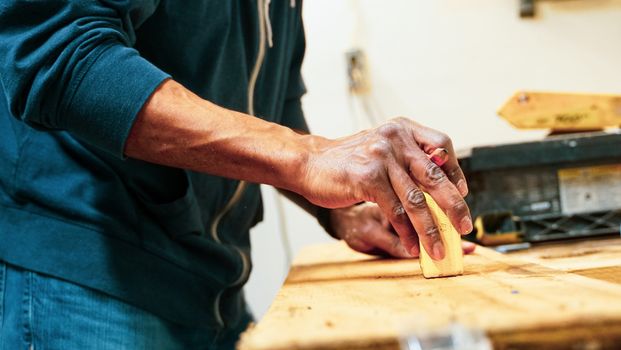
Sandpaper is perhaps the most essential tool for wood finishing. It allows you to smooth rough surfaces and prepare the wood for finishing. Sandpaper comes in various grits, and using the right grit is crucial:
- Coarse Grit (40-60): For heavy material removal.
- Medium Grit (80-120): For smoothing surfaces.
- Fine Grit (180-220): For final finishing before applying stains or finishes.
Make sure to sand in the direction of the wood grain to avoid scratches.
2. Block Plane
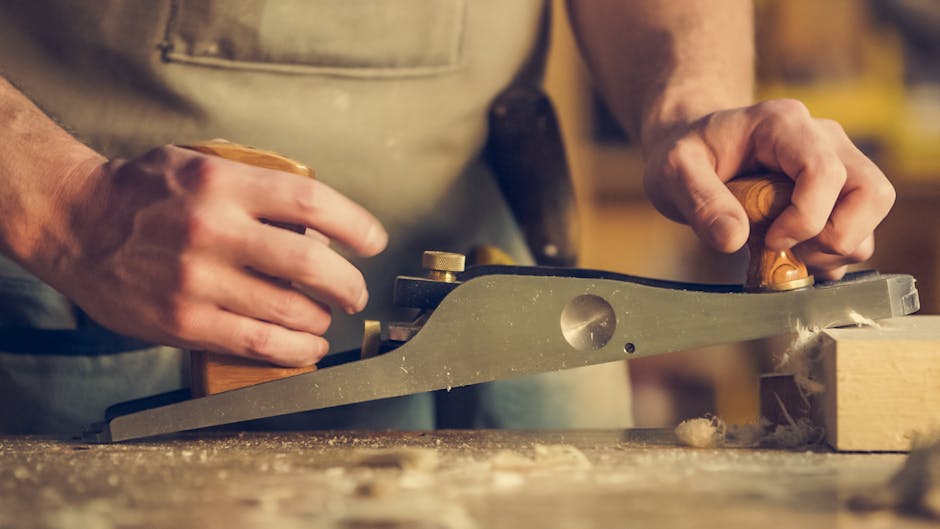
A block plane is a versatile tool that is excellent for smoothing edges and surfaces. It’s easy to control, making it perfect for beginners. When using a block plane:
- Hold the plane firmly with one hand on the handle and the other on the front knob.
- Make shallow passes across the wood surface.
This tool can help create a smooth surface that is ready for finishing.
3. Rubbing Pad
Rubbing pads are handy for applying finishes evenly. Unlike cloth, a rubbing pad allows for better control and reduces the risk of lint sticking to your finish. Here’s how to use it:
- Dip the pad into your chosen finish.
- Apply the finish in a circular motion, blending it into the wood.
- Allow the finish to dry before applying additional coats.
Using a rubbing pad can help you achieve a professional-looking finish.
4. Paint Brushes
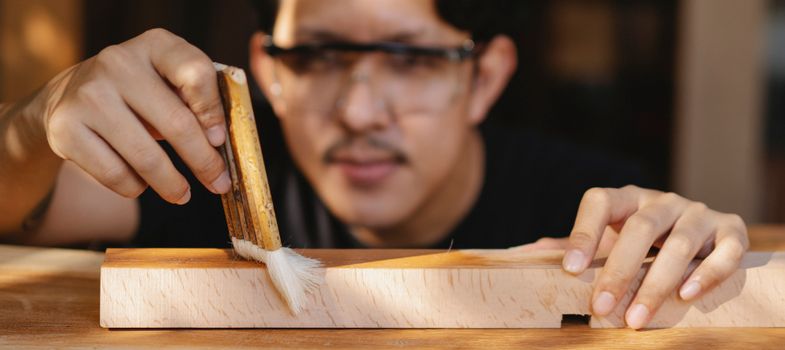
High-quality paint brushes are essential for applying finishes like varnish or polyurethane. Choose brushes made from natural bristles for oil-based finishes and synthetic bristles for water-based ones. Tips for using brushes include:
- Load the brush with enough finish but avoid overloading to prevent drips.
- Apply the finish with long, even strokes.
- Work in small sections to ensure even coverage.
Brushes help you reach into corners and detailed areas that other tools cannot.
5. Tack Cloth
A tack cloth is a sticky cloth that removes dust and debris from the wood surface before finishing. It’s an essential step to ensure a smooth, clean finish. To use a tack cloth:
- Gently wipe the surface of your project.
- Ensure the cloth is clean and free of any contaminants.
This step is crucial as any dust particles can ruin your finish.
6. Finishing Oils
While not a hand tool per se, finishing oils like Danish oil or tung oil are excellent for enhancing the natural beauty of the wood. They penetrate deeply and provide a durable finish. To apply finishing oils:
- Use a clean cloth or a rubbing pad.
- Apply a thin coat and allow it to soak in.
- Wipe away any excess after a few minutes.
These oils can bring out the grain and color of your wood, providing a beautiful, natural look.
Getting Started with Wood Finishing
Now that you know the essential hand tools for wood finishing, here are some quick tips to get you started:
- Always prepare your workspace by ensuring it is clean and dust-free.
- Practice your finishing techniques on scrap wood before applying them to your project.
- Consider using resources like Ted Woodworking for plans and guidance on your woodworking projects.
- Don’t rush the finishing process; allow adequate drying time between coats.
By following these steps, you will be well on your way to achieving beautiful finishes on your woodworking projects.
Conclusion
Wood finishing is a crucial skill for any woodworker, and having the right hand tools will make the process smoother and more enjoyable. From sandpaper to finishing oils, each tool plays a vital role in achieving a professional-looking finish. Remember to practice and take your time, and soon you'll be finishing your projects like a pro!
Frequently Asked Questions (FAQ)
1. What is the best grit of sandpaper for wood finishing?
The best grit depends on the stage of finishing. Start with medium grit (80-120) for smoothing and finish with fine grit (180-220) for the final touch.
2. Can I use water-based finishes over oil-based stains?
No, it is not recommended to apply water-based finishes over oil-based stains, as they do not adhere well. Always check compatibility.
3. How long should I wait between coats of finish?
Generally, it’s best to wait 24 hours between coats, but always refer to the manufacturer's instructions for specific times.
📚 Related Articles
🔨 Want 16,000+ Woodworking Plans?
Get instant access to step-by-step plans with blueprints and cut lists.
Get Instant Access →